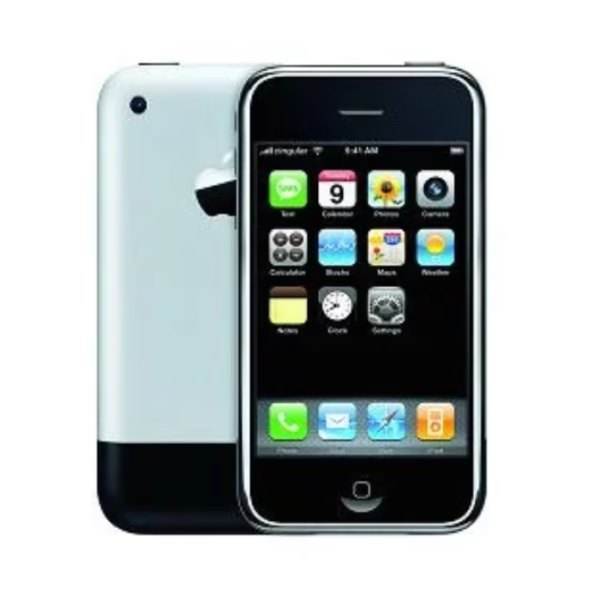
Apple iPhone (1st generation)

| Store Links | |
 |  |
| 🛠️Specifications | 📋Details |
|---|---|
| 📱 Device Name | Apple iPhone (1st gen) |
| 📅 Announced Date | January 2007 |
| ✅ Status | Discontinued (released June 2007) |
| 🎨 Colours | Black |
| 📏 Dimension | 115 x 61 x 11.6 mm (4.53 x 2.40 x 0.46 in) |
| ⚖️ Weight | 135 g (4.76 oz) |
| 🏗️ Build Material | Glass front, aluminum back, plastic frame |
| 🛡️ Durability | No official water resistance, Gorilla Glass protection |
| 🖥️ Display Type | TFT LCD (multi-touch) |
| 📐 Display Size | 3.5 inches (36.5 cm²), ~52% screen-to-body ratio |
| 🔳 Screen Resolution | 320 x 480 pixels, 3:2 ratio (~165 ppi density) |
| 🛡️ Screen Protection | Corning Gorilla Glass, oleophobic coating |
| 💡 Brightness | Typical for the time |
| ✨ Other Display Features | Touchscreen, 16M colors |
| 📸 Rear Camera | 2 MP (no autofocus, no flash) |
| 🤳 Front Camera | No |
| ⚡ Flash | No |
| 🎥 Video Recording | No (still photo only) |
| 🛠️ Other Camera Features | None beyond basic capture |
| 📱 Operating System | iOS 1 (upgradable to iOS 3.1.3) |
| 🎛️ User Interface (UI) | Apple iOS Standard UI |
| 🧠 Processor | 412 MHz ARM 11 |
| 🎨 GPU | PowerVR MBX |
| 💾 RAM | 128 MB (not officially disclosed at launch) |
| 💽 Internal Storage | 4GB / 8GB / 16GB (no expansion slot) |
| 🔋 Battery Capacity | Li-Ion 1400 mAh (non-removable) |
| 🔌 Wired Charging | 30-pin dock, USB 2.0 |
| ⚡ Wireless Charging | No |
| 📶 SIM Type | Mini-SIM |
| 🛜 Wifi | Wi-Fi 802.11b/g |
| 📳 NFC | No |
| ᛒ Bluetooth | 2.0 (headset support only) |
| 📍 Location Technology | No GPS (cell tower location via Google Maps) |
| 📞 VoLTE | No |
| 🧭 Sensors | Accelerometer, proximity |
| 🎵 Supported Audio Format | MP3/WAV player |
| 🎬 Supported Video Format | MP4, H.264 player |
| 🔊 Loudspeaker | Yes |
| 🎧 3.5mm Headset Jack | Yes |
| ✨ Other Features | Safari, Google Maps, organizer, TV-out, Standby up to 250 h, Talk up to 8 h |
Apple iPhone (1st Generation) – The Device That Revolutionized Smartphones
When the Apple iPhone (1st generation) launched in June 2007, it was more than just a new phone—it was a technological revolution. Apple’s first foray into the smartphone market combined innovative hardware, intuitive software, and a sleek design, setting a new benchmark for mobile devices worldwide.
In this article, we will explore the Apple iPhone (1st generation) in detail, discussing its design, display, camera, performance, software, connectivity, and legacy. If you’re a tech enthusiast or someone curious about the origins of modern smartphones, this article will give you a comprehensive understanding of the device that started it all.
Introduction – A New Era in Mobile Technology
Before the iPhone, mobile phones were primarily for calling and texting, with limited internet capabilities. Apple changed the game with the first-generation iPhone, merging a phone, iPod, and internet communicator into one sleek device. The multi-touch screen allowed for intuitive gestures, eliminating the need for physical keyboards and styluses.
The launch of the iPhone in 2007 didn’t just introduce a device; it introduced a new way of interacting with technology, forever influencing the smartphone industry.
Design – Sleek, Minimalist, and Functional
Apple has always been synonymous with design excellence, and the iPhone (1st generation) was no exception. Its aluminum back and glass front gave it a premium feel, while the plastic frame provided flexibility and durability. The device measured 115 x 61 x 11.6 mm and weighed 135 g, making it compact yet substantial in hand.
Design Highlights
- Color: Black
- Build Material: Glass front, aluminum back, plastic frame
- Form Factor: Slim, ergonomic, and easy to hold
The minimalist aesthetic and absence of physical keyboard or excessive buttons made the iPhone instantly recognizable and iconic, a trend Apple continues to follow in modern models.
Display – Introducing Multi-Touch Technology
The iPhone (1st generation) featured a 3.5-inch TFT LCD display with a resolution of 320 × 480 pixels (~165 ppi). While small by today’s standards, it was revolutionary at the time, offering sharp text and vibrant colors.
Display Specifications
- Screen-to-body ratio: ~52%
- Touchscreen: Multi-touch for pinch, swipe, and tap gestures
- Color Support: 16 million colors
- Protection: Corning Gorilla Glass with oleophobic coating
The multi-touch interface allowed users to zoom, scroll, and navigate effortlessly, making the device intuitive for both tech-savvy users and beginners.
Camera – Simplicity Meets Functionality
The iPhone (1st generation) came equipped with a 2 MP rear camera. While it lacked autofocus, flash, and video recording, it allowed users to capture basic photos with ease.
Camera Features
- Rear Camera: 2 MP, no autofocus or flash
- Front Camera: None
- Video Recording: Not supported
- Additional Features: None beyond basic photo capture
Despite its limitations, the camera fulfilled the essential need for on-the-go photography and laid the foundation for Apple’s future camera innovations.
Performance – Powered for Its Time
The device was powered by a 412 MHz ARM 11 processor and a PowerVR MBX GPU, coupled with 128 MB of RAM. While modest compared to today’s devices, it delivered smooth performance for iOS apps and multimedia.
Performance Highlights
- Fast and responsive touch interface
- Smooth operation for Safari, iPod, and core apps
- Efficient battery management
This combination of hardware allowed users to browse the web, play music, and use apps seamlessly, which was groundbreaking in 2007.
Operating System – iOS, Then Called iPhone OS
The iPhone (1st generation) ran iOS 1, later upgradable to iOS 3.1.3. iOS introduced a simple, user-friendly interface with app icons, home screen, and multitouch gestures.
Key iOS Features
- Safari web browser
- Mail, Calendar, and Contacts apps
- Organizer and Google Maps
- iPod functionality integrated within the phone
This all-in-one operating system set Apple apart, providing a seamless experience that combined communication, entertainment, and productivity in one device.
Storage and Memory – Space for Essentials
The first iPhone offered internal storage options of 4GB, 8GB, and 16GB. There was no expandable storage, but for its time, it was sufficient to store music, photos, and a handful of apps.
Memory Highlights
- RAM: 128 MB
- Internal Storage: 4GB / 8GB / 16GB (no expansion slot)
While limited by today’s standards, it was enough for essential apps and media, emphasizing Apple’s focus on software efficiency rather than relying solely on hardware.
Connectivity – Staying Connected in a Mobile World
Connectivity was a major advancement for the iPhone (1st generation). Though it didn’t feature 3G, it included Wi-Fi and Bluetooth to stay connected.
Connectivity Specifications
- Wi-Fi 802.11b/g
- Bluetooth 2.0 (headset support only)
- Mini-SIM support
- No GPS; location via cell tower triangulation
These features enabled internet browsing, email access, and wireless file sharing, revolutionizing how people used mobile devices.
Battery Life – Reliable for Daily Use
The iPhone (1st generation) came with a non-removable 1400 mAh battery, providing reliable performance for its time.
Battery Highlights
- Standby time: Up to 250 hours
- Talk time: Up to 8 hours
This allowed users to rely on their iPhone for daily communication and media consumption, a significant improvement over other smartphones of the era.
Audio and Multimedia – iPod in Your Pocket
Apple integrated iPod functionality directly into the iPhone (1st generation), allowing users to listen to music, watch videos, and browse podcasts all from a single device.
Audio Features
- 3.5mm headphone jack
- MP3 and WAV support
- MP4 and H.264 video support
- Built-in loudspeaker
The combination of audio playback and touchscreen control made music and media consumption easier than ever before, contributing to the device’s massive popularity.
Sensors and Other Features
The first iPhone included essential sensors such as an accelerometer and proximity sensor, enabling features like auto-rotate and screen dimming during calls. Other notable features included:
- Safari web browser
- Google Maps integration
- TV-out for media sharing
- Standby up to 250 hours, talk time up to 8 hours
These features created a rich user experience despite the hardware limitations of the time.
Impact and Legacy – The Device That Started It All
The Apple iPhone (1st generation) was more than just a smartphone; it was a revolutionary device that reshaped the mobile industry.
Why the iPhone (1st generation) Matters
- Introduced Multi-Touch Interface: Changed how users interacted with screens.
- All-in-One Device: Combined phone, iPod, and internet device.
- Software-Driven Innovation: iOS became the foundation for Apple’s ecosystem.
- Influenced Competitors: Inspired the entire smartphone industry to innovate.
- Created App Culture: Laid the groundwork for the App Store and mobile apps.
Even today, the iPhone (1st generation) is remembered as a symbol of innovation and a turning point in mobile technology.
Conclusion – The Birth of the Modern Smartphone
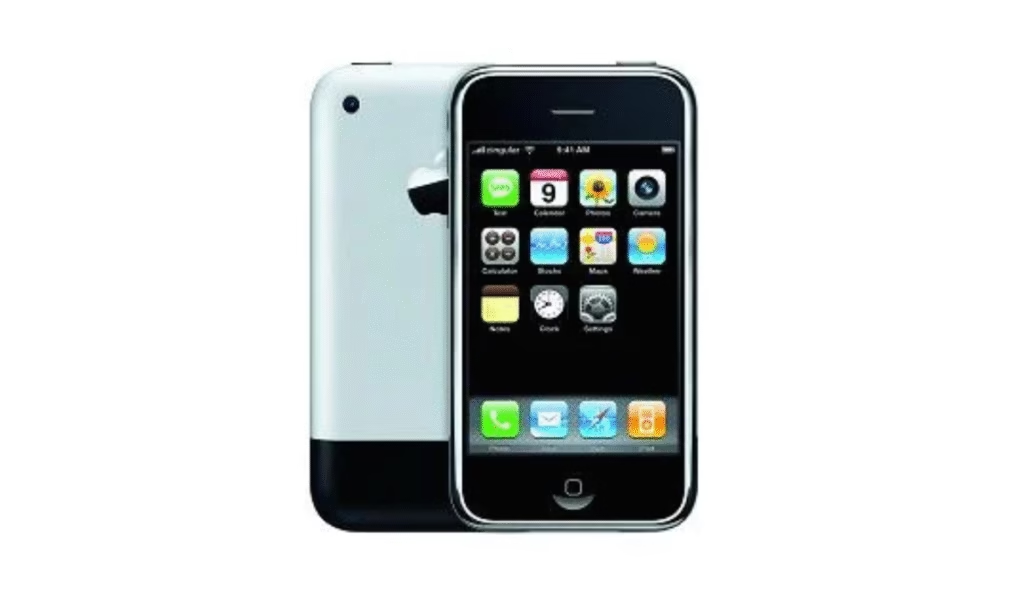
The Apple iPhone (1st generation) was a game-changer in 2007, introducing features and a user experience that are now standard in every smartphone. With its sleek design, multi-touch display, integrated software, and intuitive interface, it was a device that redefined how we communicate, entertain, and work on the go.
Apple’s bold vision with the iPhone (1st generation) laid the foundation for the entire iPhone series, which continues to dominate the smartphone market. For anyone interested in technology history, the Apple iPhone (1st generation) is a milestone worth exploring.
Editor’s Review
📝Reviews
Editor’s Review

Disclaimer Note
Device specifications and details shown on this website are collected from official sources and trusted online portals. We do not guarantee that the information is 100% accurate or up to date. Prices and features may vary by region and time.
More Devices from Apple














Latest Post